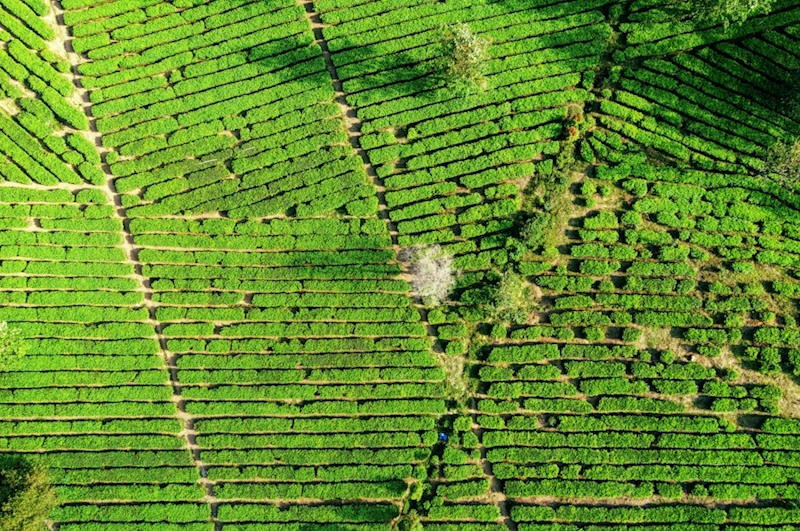
Once a niche ceremonial product, matcha has become a foundational ingredient across the food, beverage, and cosmetic industries. This evolution is underpinned by a market valuation estimated to reach between $4.61 billion and $5.40 billion. The trajectory for the remainder of the decade suggests a sustained CAGR ranging from 7.9% to 11.6%, positioning the industry to exceed $9 billion by the mid-2030s.
Global Market Valuation and Macroeconomic Projections
The matcha sector in 2026 is driven by a unique two-pronged market structure. On one side, the mainstreaming of matcha into mass-market retail and quick-service restaurant menus provides high-volume demand; on the other, a burgeoning super-premium tier of single-origin, ceremonial-grade products caters to an affluent, health-conscious demographic willing to pay a significant premium for traceability and sensory excellence. Current data indicates that the global market has recovered from the initial volatility of the early 2020s, settling into a pattern of rapid but structured expansion.
Market Size and Growth Forecasts 2024–2033
Projection A (2024–2030): base $4.33B (2024), est. $4.61B (2026), $7.59B (2030), CAGR 9.81%.
Projection B (2026–2033): base $4.18B (2024), est. $5.40B (2026), $9.20B (2033), CAGR 7.9%.
Projection C (2021–2031): $3.91B (2026), $5.35B (2031), CAGR 6.47%.
Projection D (2025–2032): base $4.67B (2024), est. $4.95B (2026), $7.46B (2032), CAGR 6.03%. Growth is driven by increasing consumer health consciousness, usage in functional beverages and foods, and personal care products. A significant challenge is supply chain vulnerability from traditional cultivation methods, an aging farming population, and climate variability.
The 2025–2026 Supply Crisis: Structural and Climatic Constraints
Perhaps the most defining characteristic of the 2026 matcha market is the supply shortage that reached a zenith in late 2025 and continues to disrupt global supply chains. This crisis results from demographic shifts, technical limitations, and environmental stressors that have decoupled production capacity from accelerating global demand. The primary material for matcha is tencha: shade-grown green tea leaves that have been de-veined and de-stemmed. Tencha production is exceptionally labor-intensive and requires specialized knowledge that is increasingly scarce.
Causal Factors of the Tencha Shortage
Between 2000 and 2020, Japan lost approximately 53,000 tea farmers to retirement. Younger generations often find tea farming less desirable, leading to a decline in skilled labor for meticulous matcha production. High-quality matcha requires granite stone mills costing up to $5,000 each, producing only about 50 grams per hour. There are only approximately 7,500 mills in Japan. Matcha plants take four to five years to reach maturity. When tencha reserves were exhausted in 2024, farmers entered 2025 and 2026 with no cushion. In 2025, tencha prices increased by as much as 220%: the most significant spike in industry history. Some Japanese farmers raised prices by up to 400% due to scarcity and an 800% increase in order requests.
Climate Change and Yield Volatility
Climate change has introduced unpredictability. Rapid shifts make it harder to time harvests, critical for maintaining amino acid and chlorophyll content. Late-season frost risk has increased; farmers in regions like Shizuoka use fans and water pumps to prevent freezing, yet yields continue to suffer. Increased severe weather events present risks to spring harvests. In 2025, a cold spring decimated many crops, further tightening the global market.
Regional Market Analysis: A Study in Divergent Demand
Asia-Pacific leads with 41–45% of revenue share. Japan remains the gold standard; China has expanded through large-scale culinary-grade production. North America (~25–30% share) shows extreme cafe concentration: cafes represent 80% of channel demand: with RTD and supplements fueling US dominance. Western Europe (~20% share) favors quality certification and premium D2C models, projected to grow from $1.14 billion (2025) to $1.74 billion by 2035. Germany leads; the UK is fastest-growing at ~7% CAGR. Middle East/Africa is emerging with ~10.1% CAGR, driven by luxury urbanization and specialty cafes in the UAE and Saudi Arabia.
Product Grade and Tiered Pricing
Top Tier (~$280+/kg): luxury D2C and tea ceremonies; ceremonial/single-origin; high margins; focus on terroir.
Second Tier (~$200/kg): upscale cafés and ice cream chains; premium business-use differentiated by color and quality certification.
Volume Tier (~$150/kg): RTD manufacturers and large café chains; ingredient-based; thin margins; requires large-lot contracts. Classic grade accounted for 57.1% of revenue share in 2024. Ceremonial and high-grade matcha is no longer niche: cafés now promote origin, quality, and sourcing similarly to specialty coffee.
The Functional Beverage Revolution
Functional drinks are one of the strongest beverage trends in 2026. Matcha is frequently combined with collagen, adaptogens (ashwagandha, rhodiola), probiotics, and medicinal mushrooms (lion's mane, tremella), reshaping RTD and powder markets with a focus on mental clarity and cognitive enhancement. The synergy of caffeine and L-theanine makes matcha a favorite for sustained mental energy. Gen Z consumers: 67% of whom prefer clean energy over synthetic caffeine: are driving matcha lattes, iced drinks, and RTD formats. Global demand for adaptogen-based beverages is projected to reach $15.5 billion by 2026.
Cross-Industry Adoption: Food, Supplements, and Cosmetics
Beyond beverages, matcha is used in baked goods, noodles, rice dishes, and savory applications. The supplements industry is adopting matcha in capsules, gummies, and nutraceutical formulations. Cosmetics integrate matcha into skincare and haircare for anti-aging, anti-inflammatory, and detoxifying properties. The beauty crossover trend merges high antioxidant profiles with personal care for inner and outer wellness. German market forecasts suggest the cosmetics segment could reach $50 million by 2035.
Strategic Sourcing and Sustainability
Brands are diversifying sourcing: including emerging origins like Kenya, where Kenya Matcha Estate Ltd. focuses on sustainable, traceable, solar-dried production. Sustainability practices and eco-friendly packaging have become crucial differentiators. Approximately 60% of European consumers will pay a premium for sustainably sourced products, prompting transparent sourcing and regenerative farming practices.
Aestheticism and Social Currency
Matcha's vibrant green color remains a massive visual hook on image-based social media. In consumer surveys, color was the most memorable packaging element (60% recall). Brands leverage photogenic value through Instagrammable café menus and hashtags like #matchalatte. In 2026, the color of a brand's matcha is often as important as its flavor profile in driving initial trial.
Conclusion: Strategic Recommendations for Industry Participants
The matcha market in 2026 is defined by tension between surging global popularity and acute supply chain fragility. Success requires transparency, quality, and innovation. Industry leaders must diversify sourcing: through long-term agreements with Japanese farmers or selective adoption of traceable alternatives: while innovating in functional and RTD segments. For digital presence, brands should prioritize E-E-A-T, authentic storytelling via vertical video, and optimization for AI-search era queries. Matcha is no longer just a tea; it is a symbol of wellness sophistication and a foundational component of the modern functional lifestyle.